Botanical vs cannabis terpenes is one of the most important comparisons for anyone choosing a cannabis vape. Both types of terpenes can shape aroma and flavor, but they come from different raw materials and may create noticeably different product experiences. Understanding those differences makes it easier to read labels, compare vape collections, and choose a profile that matches your preferences.
In this guide, we break down seven essential differences between botanical and cannabis-derived terpenes, from sourcing and aroma complexity to consistency and product positioning. The botanical vs cannabis terpenes comparison is not about declaring one category universally better. It is about helping California consumers make a more informed choice based on flavor, authenticity, and intended experience.
Quick Answer: Botanical vs Cannabis Terpenes
Botanical terpenes are isolated from non-cannabis plants such as citrus, pine, lavender, herbs, and hops. Cannabis-derived terpenes are collected from cannabis plant material. In botanical vs cannabis terpenes, a limonene molecule has the same basic chemical identity regardless of its plant source, but the complete aromatic blend can differ because cannabis extracts may contain a more complex mixture of terpenes and other volatile compounds.
| Feature | Botanical Terpenes | Cannabis-Derived Terpenes |
|---|---|---|
| Source | Non-cannabis plants | Cannabis plant material |
| Typical flavor direction | Fruit-forward, sweet, herbal, or customized | Strain-inspired and cannabis-forward |
| Consistency | Generally easier to standardize | Can vary by cultivar and harvest |
| Availability | Broad and scalable | More limited and specialized |
| Best suited for | Approachable, recognizable flavors | Plant-authentic aroma profiles |
What Are Botanical Terpenes?
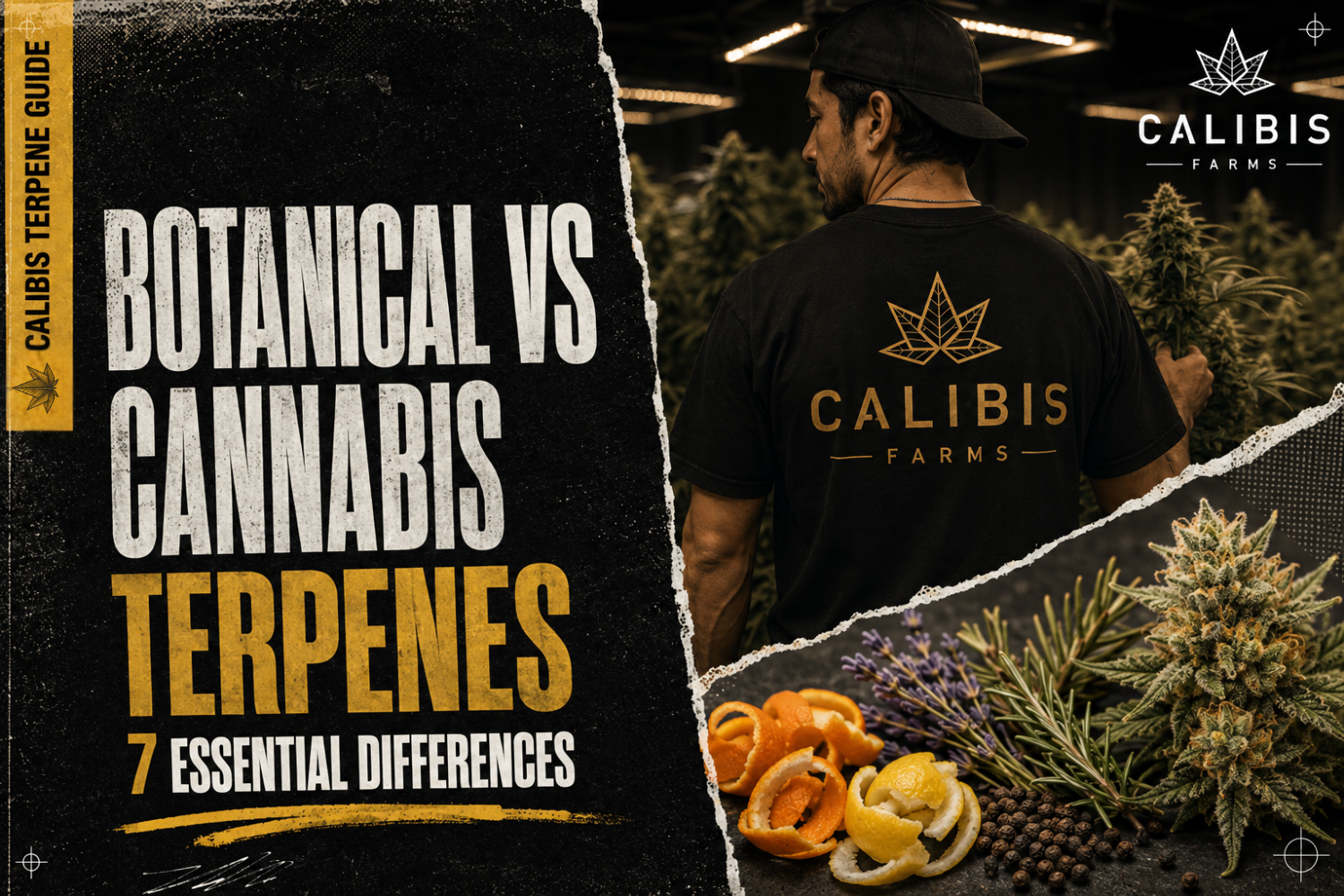
Botanical terpenes are aromatic compounds obtained from plants other than cannabis. Familiar examples include limonene from citrus peels, pinene from pine sources, and linalool from aromatic flowers and herbs. Manufacturers can combine individual botanical terpenes to build a consistent flavor profile or recreate some of the aromatic notes associated with a cannabis cultivar.
Because the botanical world offers abundant terpene sources, these ingredients provide considerable flexibility. A formulation can emphasize bright lemon, ripe fruit, fresh pine, cool mint, floral notes, or dessert-like flavors. This versatility is why botanical blends often appeal to consumers who want a clear, familiar taste rather than a strongly cannabis-forward profile.
Explore the Calibis Farms Botanical Blends to see how plant-derived aroma profiles can be used in modern cannabis vapes.
What Are Cannabis-Derived Terpenes?
Cannabis-derived terpenes, often shortened to CDTs, originate from cannabis plant material. They are valued for preserving or rebuilding aroma characteristics associated with particular cultivars. A cannabis-derived profile may include familiar dominant terpenes such as myrcene, limonene, pinene, or beta-caryophyllene alongside smaller quantities of other aromatic compounds.
Those minor components can matter. Aroma is rarely created by one molecule acting alone. It is the balance among many volatile compounds that gives a cultivar its recognizable citrus, fuel, pine, floral, earthy, or spicy character. This is why cannabis-derived blends are commonly chosen by consumers seeking an experience that tastes and smells closer to cannabis flower.
For a deeper introduction, read our guide to cannabis-derived terpenes and why they matter in vapes.
Botanical vs Cannabis Terpenes: 7 Essential Differences
1. The Original Plant Source
The clearest difference in botanical vs cannabis terpenes is their source. Botanical terpenes are separated from non-cannabis plants, while cannabis-derived terpenes come from cannabis. The individual compounds may be chemically equivalent, but the source affects the mixture available to the formulator.
This distinction is useful when reading a package. “Natural terpenes” does not automatically mean cannabis-derived. Consumers looking for a specific source should check whether the label clearly says botanical terpenes, cannabis-derived terpenes, CDT, or another defined formulation.
2. Aroma Complexity
Cannabis-derived terpene extracts may retain a broad range of major and minor aromatic compounds from the original plant material. That complexity can create a layered aroma that changes between the first inhale and the finish. Botanical formulations can also be sophisticated, but they are often assembled from a more controlled selection of compounds.
In a botanical vs cannabis terpenes comparison, complexity is not always the goal. Some consumers prefer a focused citrus or berry flavor that is easy to recognize. Others want the nuanced gas, earth, spice, pine, and fruit combinations associated with cannabis cultivars. The better option depends on the intended profile.
3. Flavor Style
When comparing botanical vs cannabis terpenes, flavor style is often the difference consumers notice first. Botanical blends commonly lean toward fruit, candy, mint, beverage, or dessert-inspired directions. Cannabis-derived blends tend to emphasize cultivar-like notes, including dank, earthy, skunky, gassy, piney, peppery, and floral characteristics.
Neither flavor direction is inherently superior. Botanical profiles can be inviting for people who enjoy bold, familiar flavors. Cannabis-derived profiles can be preferable for people who value a more flower-like character.
4. Batch Consistency
Botanical terpenes are typically easier to source at scale and standardize across production runs. A carefully controlled recipe can deliver a consistent flavor from one batch to the next. That predictability is valuable when a consumer wants the same recognizable profile every time.
Cannabis is an agricultural product. Cultivar genetics, growing conditions, harvest timing, curing, storage, and extraction can influence its aromatic composition. Cannabis-derived profiles may therefore show subtle batch-to-batch differences. For some consumers, that natural variation is part of the appeal; for others, consistency matters more.
5. Cultivar Authenticity
Cannabis-derived terpenes have the clearest advantage when the goal is a cultivar-inspired experience. Because they originate from cannabis, they can preserve aromatic relationships that are difficult to reproduce using only a short list of isolated botanical compounds.
However, a strain name on a vape does not by itself explain the terpene source. A botanical recipe may be designed to resemble a popular cultivar. Consumers who care about authenticity should review the ingredient information rather than relying only on the flavor name or packaging.
6. Availability and Cost
Botanical terpene sources are widely available, making them easier to scale and often more economical. Cannabis-derived terpenes require suitable cannabis material, specialized handling, testing, and compliant production. Supply may also depend on cultivar availability and harvest conditions.
These botanical vs cannabis terpenes sourcing differences can influence the final product price. A higher price does not automatically guarantee a better personal experience, though. Quality depends on formulation, source material, testing, hardware, storage, and manufacturing—not simply whether the terpenes are botanical or cannabis-derived.
7. The Intended Vape Experience
The final difference in botanical vs cannabis terpenes is the experience each product is designed to deliver. Botanical blends often prioritize accessible flavor and consistency. Cannabis-derived blends often prioritize authentic cannabis aroma and cultivar character.
Calibis Farms offers multiple profile directions so adults can choose according to their own preferences. Browse Natural Blends, Botanical Blends, and Cold Terps, then use the product label and licensed retailer information to compare available options.
Does Terpene Source Change THC Potency?
Terpenes are aromatic compounds; they are not THC. Choosing botanical or cannabis-derived terpenes does not by itself determine the amount of THC in a product. Potency should be evaluated using the cannabinoid information and laboratory results shown on the compliant package.
Terpenes can strongly influence perceived aroma and flavor, which may change how a product experience is described. Research continues into interactions among cannabis compounds, but consumers should be cautious about claims that a particular terpene source guarantees a medical outcome or a specific effect. The U.S. Food and Drug Administration notes that many questions about cannabis products still require additional research.
How to Choose Between Botanical and Cannabis-Derived Terpenes

When choosing botanical vs cannabis terpenes, use your flavor preferences as the starting point. Choose a botanical profile if you enjoy recognizable fruit, sweet, mint, or dessert flavors and value repeatable consistency. Consider a cannabis-derived profile if you prefer an aroma closer to flower and enjoy cultivar-inspired complexity.
Then evaluate the complete product rather than focusing on one ingredient. Look for clear labeling, required California compliance information, cannabinoid content, batch details, and packaging that appears intact. Purchase only through licensed California retailers. The California Department of Cannabis Control provides current consumer guidance on legal cannabis purchasing and possession.
- Read the terpene source on the label.
- Choose a flavor direction that matches your preferences.
- Check cannabinoid potency separately from terpene information.
- Buy from a licensed California retailer.
- Store the vape according to the package instructions.
- Keep all cannabis products away from children and pets.
Frequently Asked Questions
Are botanical terpenes synthetic?
Not necessarily. Botanical terpenes can be isolated from natural non-cannabis plant sources. “Botanical” describes the plant source, while “synthetic” describes how a compound was produced. Read the manufacturer’s ingredient and sourcing information for the specific product.
Do botanical terpenes taste like cannabis?
They can be blended to recreate selected cannabis-like notes, but many botanical formulations intentionally emphasize fruit, sweet, herbal, or dessert flavors. A cannabis-derived blend will generally be the more direct choice when flower-like aroma is the priority.
Are cannabis-derived terpenes better?
They are better suited to some goals, especially cultivar authenticity and cannabis-forward aroma. Botanical blends may be better suited to bold flavor, consistency, and approachable profiles. The best choice is the one that matches the consumer’s priorities and comes from a compliant, tested product.
Can terpenes make a vape intoxicating?
Terpenes themselves are not THC and are not the primary intoxicating ingredient in a cannabis vape. Check the package for THC and other cannabinoid content, and follow all California adult-use requirements and product warnings.
Botanical vs Cannabis Terpenes: The Final Choice
The most useful way to understand botanical vs cannabis terpenes is to view them as two different formulation tools. Botanical terpenes offer broad flavor possibilities and dependable consistency. Cannabis-derived terpenes offer a closer connection to the complex aromatic character of cannabis flower.
Whichever direction you prefer, choose transparent labeling, compliant products, and licensed retailers. Explore Calibis Farms products and use our locations page to find availability near you.
For adults 21 and older. Cannabis products may cause impairment and may have health risks. Do not drive or operate machinery after use. Keep away from children and pets. This article is for general educational purposes and is not medical advice.