
California cannabis has never been only about products.
It has always been about the people behind them: growers, breeders, manufacturers, retailers, artists, operators, and communities that helped turn a plant into one of the most influential cultures in the state.
On November 4 and 5, 2026, many of those worlds will meet again at Hall of Flowers Sacramento, taking place at Cal Expo. And this year’s event arrives at a particularly interesting moment for California cannabis.
Craft is back in the conversation.
Sun-grown cultivation is receiving renewed attention.
Consumers are asking more questions about where products come from.
Retailers are looking for brands with stories that go beyond THC percentage and packaging.
And Hall of Flowers is changing too.
For the first time, the Sacramento event will combine its traditional industry-focused format with a second day open to consumers — creating a meeting point between the businesses shaping cannabis and the people actually buying it.
For Calibis Farms, that makes Hall of Flowers Sacramento 2026 more than another trade show.
It is a chance to be part of a larger conversation about where California cannabis is going next.
What Is Hall of Flowers?
Since launching in 2018, Hall of Flowers has developed into one of the country’s most recognizable cannabis trade events.
Its original purpose was straightforward: put licensed cannabis brands in the same room as verified retailers and buyers.
Hall of Flowers describes the event as a B2B environment built around product discovery, retail relationships, partnerships, and commerce. Retail buyers attend specifically to discover products, meet operators, and establish new wholesale relationships.
That makes it fundamentally different from a traditional consumer cannabis festival.
The first question isn’t simply:
What looks cool?
It is also:
What belongs on dispensary shelves?
That distinction has helped make Hall of Flowers an important room for brands trying to grow distribution in California.
Why Sacramento 2026 Feels Different
This year’s event expands that formula.
Day 1 remains focused on business.
Brands meet buyers, retailers explore new products, operators build relationships, and the industry’s commercial side takes center stage.
But on Day 2, Hall of Flowers is opening its doors to consumers for what the organizers describe as a festival-style environment with entertainment, food, culture, and direct-to-consumer sales.
That changes the dynamic.
For years, cannabis brands often had two separate audiences:
the retailer deciding whether to carry the product,
and the consumer deciding whether to buy it.
At Hall of Flowers Sacramento, those audiences begin to overlap.
Brands can talk to buyers one day and interact directly with consumers the next.
That creates something especially valuable in cannabis:
feedback.
Retailers can see what attracts consumers.
Consumers can meet the people behind products.
Brands can better understand how their stories translate outside a marketing deck.
And craft-focused companies get an opportunity to explain why sourcing, cultivation, genetics, extraction, and relationships matter.

Craft Cannabis Is Moving Back Toward the Center
One of the clearest signals coming from Hall of Flowers this year is its renewed emphasis on Craft Sungrown.
The organizers have been actively highlighting growers and brands connected to California’s sun-grown and craft cultivation culture.
Hall of Flowers has described California craft cannabis as undergoing a resurgence, with Sacramento bringing together growers, brands, and retailers focused on bringing craft-quality sun-grown products to market.
That group includes names connected to California’s cultivation heritage and modern craft market, including Mendocino Natural Farms, Henry’s Original, Garcia Hand Picked, Redwood Roots, Emerald Triangle Craft, Gold Standard — and Calibis.
That emphasis matters.
Because for much of the legal cannabis era, the industry conversation has centered heavily on scale.
More production.
More distribution.
More efficiency.
More doors.
Those things are necessary for a functioning industry.
But they can also make cannabis feel increasingly like a commodity.
Craft pushes the conversation in another direction.
Who grew it?
Where did the flower come from?
Which genetics were selected?
How was it cultivated?
What happened to those characteristics during extraction?
Does the final product still carry anything recognizable from its source?
Those are exactly the kinds of questions returning to the forefront in 2026.
Why Craft Matters in a Market Built Around Scale
California cannabis is mature enough now to understand that scale and quality are not automatically opposites.
Large producers can make excellent cannabis.
Small farms can make poor cannabis.
But scale changes the pressures placed on production.
Large operations need predictability.
Retailers need reliable inventory.
Manufacturers need consistent inputs.
Consumers expect products to perform similarly from one purchase to the next.
Craft production often places additional emphasis on something different:
character.
Specific farms.
Specific genetics.
Specific batches.
Specific relationships.
That distinction is increasingly important as cannabis shelves become more crowded.
When dozens of products offer similar THC percentages and similar formats, the question becomes:
Why this one?
For craft cannabis brands, the answer often begins long before the package reaches the shelf.
The Grower Is Becoming Part of the Product Again
One of the most interesting changes happening in cannabis is the return of the grower to the consumer conversation.
For years, many manufactured cannabis products separated the finished item from the source material.
A vape cartridge might prominently display THC percentage, flavor, and strain name while telling the consumer almost nothing about the cannabis that went into the oil.
That is beginning to change.
Full-spectrum products, live resin, rosin, terpene-focused extracts, and craft collaborations have made source material increasingly relevant.
If the goal is to preserve more of the plant’s character, then the quality of the flower matters.
The grower matters.
The genetics matter.
And cultivation matters.
Hall of Flowers’ Craft Sungrown focus reflects that shift.
It puts agricultural identity back into a part of the cannabis industry that can sometimes become disconnected from agriculture.
Sun-Grown Cannabis Has a Different Story to Tell
The return of sun-grown cannabis to the spotlight is part of the same movement.
California cannabis was built under the sun long before indoor cultivation became synonymous with premium flower.
Outdoor and sun-grown production connect cannabis directly to:
soil,
season,
climate,
elevation,
microclimate,
and geography.
That doesn’t automatically make a product better.
But it does give the plant another dimension.
We explored that movement in our recent article, Why Sun-Grown Cannabis Is Back in the Spotlight — Just in Time for Hall of Flowers 2026.
Hall of Flowers now brings that discussion into a physical space where growers, manufacturers, retailers, brands, and consumers can experience those differences together.
That is where education becomes more powerful than a label.
Hall of Flowers Is Still About Business
The craft conversation may be cultural, but Hall of Flowers remains fundamentally connected to retail.
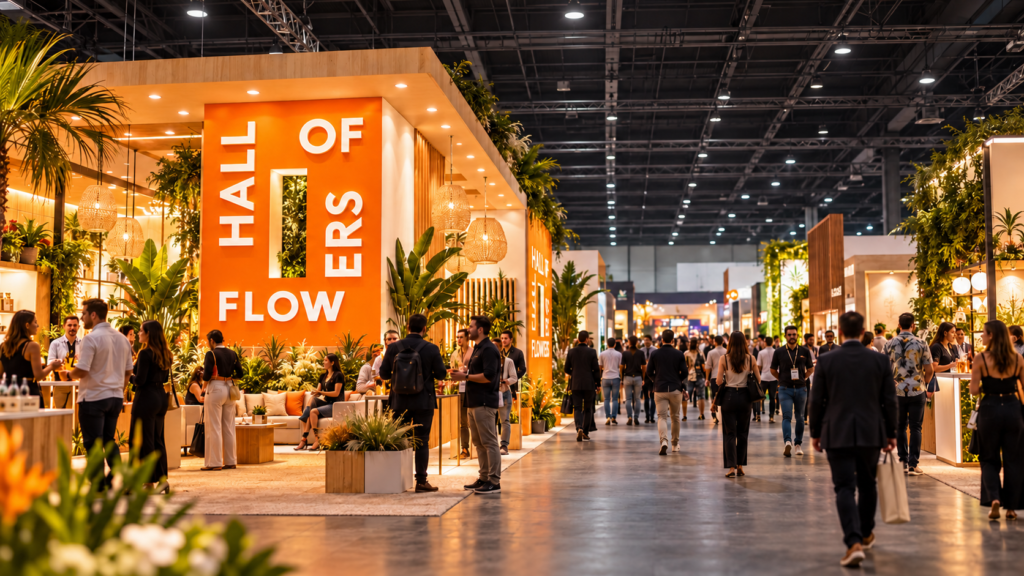
The event says licensed retail buyers are admitted through a vetting process and attend specifically to discover products, meet brands, renew relationships, and make buying decisions.
That creates an important test for craft brands.
Story alone isn’t enough.
A product still has to work commercially.
Retailers need to understand:
Will consumers buy it?
Can the brand support the account?
Is the pricing sustainable?
Does the packaging communicate clearly?
Can the product create repeat purchases?
Can staff explain why it is different?
Craft cannabis has to translate agricultural value into retail value.
Hall of Flowers is one of the places where that translation happens.
Retailers Are Being Asked to Sell More Than Price
Hall of Flowers Sacramento is also bringing Tactical Talks into the Craft Sungrown section.
Rather than traditional broad industry panels, the program is being positioned around focused, practical sessions for retailers and operators.
Topics include questions such as how retailers can improve terms, protect margins, decide whether to build house brands, and train staff to sell a story instead of a price.
That last question is especially relevant to craft cannabis.
Because craft is difficult to communicate when the only comparison is:
THC percentage.
Price.
Discount.
If consumers understand the grower, source material, genetics, cultivation, extraction, and reason a product exists, price becomes only one part of the buying decision.
That is a much healthier environment for smaller and craft-focused brands.
Why Hall of Flowers Matters to Calibis Farms
Calibis Farms was built around relationships.
We are a family-owned California cannabis company working with growers and manufacturers we know and trust, with a focus on turning quality cannabis into flavorful, consistent vape products.
For us, craft is not simply a word used on packaging.
It is connected to where the cannabis comes from and who is responsible for it before it reaches us.
That is one reason Hall of Flowers Sacramento is such a natural environment for Calibis.
The event itself has specifically included Calibis among the brands participating in the Craft Sungrown conversation, alongside other California growers and operators focused on bringing craft-quality sun-grown products to market.
It puts us in a room built around many of the same ideas that shape our products:
relationships,
source material,
grower identity,
terpene expression,
California culture,
and retail partnerships.
From Craft Flower to Vape Oil
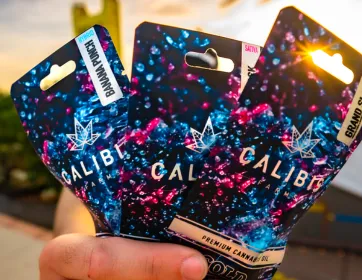
For a vape brand, craft can sometimes be harder to see.
Consumers can look at flower.
They can examine the structure.
Smell the jar.
See trichomes.
Recognize a cultivar.
With a cartridge, most of that visual connection disappears.
The oil looks like oil.
That’s why transparency matters even more.
A craft-oriented vape needs to communicate what happened before the cartridge existed.
What flower went into it?
Who grew it?
What kind of extract was created?
What characteristics were preserved?
Why was that oil paired with that hardware?
The finished product may be modern, portable, and convenient.
But its story can still begin on a farm.
The Calibis × High Hill Example
Our work with High Hill shows what that relationship can look like.
High Hill’s craft sun-grown cannabis from the Sierra Nevada foothills becomes the starting point for Calibis Cold Terps cartridges designed around terpene expression and source-material character.
The relationship runs:
farm → flower → extraction → oil → cartridge.
That chain matters.
Because when consumers become more interested in what is inside their vapes, the answer shouldn’t begin with the cartridge.
It should begin with the cannabis.
That is one of the reasons the Craft Sungrown conversation at Hall of Flowers feels especially relevant to us.
Hall of Flowers Is Bringing Industry and Consumers Together
Opening Day 2 to the public could become one of the most important changes to the Hall of Flowers format.
Traditionally, cannabis trade events focus heavily on the people who decide what reaches dispensary shelves.
But consumers ultimately decide what stays there.
Bringing both groups closer together creates opportunities that traditional B2B events don’t always provide.
A buyer can hear a brand story.
A consumer can respond to it.
A retailer can watch that interaction.
A brand can see which products create genuine interest.
That kind of feedback loop can be especially valuable for independent companies competing against much larger operators.
Marketing metrics can tell you what people clicked.
Retail data can tell you what they purchased.
Meeting someone at a booth can tell you why they cared.
Sacramento Is the Right Place for This Moment
Sacramento is a fitting home for this version of Hall of Flowers.
The city sits between major consumer markets and many of Northern California’s historic cultivation regions.
It is simultaneously:
an urban retail market,
the center of California government,
and geographically connected to the agricultural communities that shaped the state’s cannabis identity.
Bringing brands, growers, retailers, and consumers together at Cal Expo creates a useful snapshot of California cannabis as it exists today:
part agriculture,
part manufacturing,
part retail,
part culture,
and increasingly part mainstream consumer commerce.
What to Expect at Hall of Flowers Sacramento 2026
Hall of Flowers Sacramento takes place:
November 4–5, 2026
10 AM–5 PM
Cal Expo — Sacramento, California
Day 1 centers on the traditional industry environment: retailers, brands, products, relationships, and business.
Day 2 expands into a consumer-facing experience with entertainment, food, culture, and direct product sales.
The exhibitor ecosystem includes cannabis brands, cultivators, manufacturers, retailers, technology companies, packaging providers, ancillary businesses, and other operators from across the industry.
For anyone trying to understand where California cannabis is heading, there may be few better places to watch it happen in real time.
Why 2026 Could Be a Turning Point for Craft Cannabis
Craft cannabis is unlikely to replace large-scale production.
That isn’t the point.
California’s industry needs both scale and specialization.
Consumers need affordable products.
Retailers need reliable supply.
Manufacturers need consistency.
But mature markets also create room for differentiation.
And cannabis has something that many consumer industries don’t:
agricultural identity.
A product can come from a particular grower.
A particular region.
A particular harvest.
A particular cultivar.
A particular relationship.
That gives craft cannabis something mass production can struggle to reproduce:
a sense of origin.
Hall of Flowers putting Craft Sungrown prominently into the Sacramento conversation suggests that origin is becoming valuable again.
More Than a Trade Show
Hall of Flowers Sacramento 2026 will certainly be about products.
New drops.
Retail deals.
Distribution.
Displays.
Packaging.
Technology.
Sales.
But underneath all of that is a bigger question.
What kind of cannabis industry does California want to build next?
One where products become increasingly standardized and interchangeable?
Or one where scale and professionalism can coexist with growers, genetics, origin, culture, and craft?
The answer will probably be somewhere between those two extremes.
And that is exactly why Hall of Flowers matters.
It puts the people building that future in the same place.
See You in Sacramento
Calibis Farms will be at Hall of Flowers Sacramento on November 4–5, 2026, joining the broader Craft Sungrown conversation and connecting with the growers, retailers, brands, consumers, and people helping shape California cannabis.
For us, it is an opportunity to show where our products come from, talk about why source material matters, reconnect with people across the industry, and meet consumers who want to know more about what is actually inside their vape.
California cannabis is evolving.
But some of the ideas moving back to center stage are the same ones that built the culture in the first place:
good flower, good people, real relationships, and respect for where the product begins.
We’ll see you at Hall of Flowers.