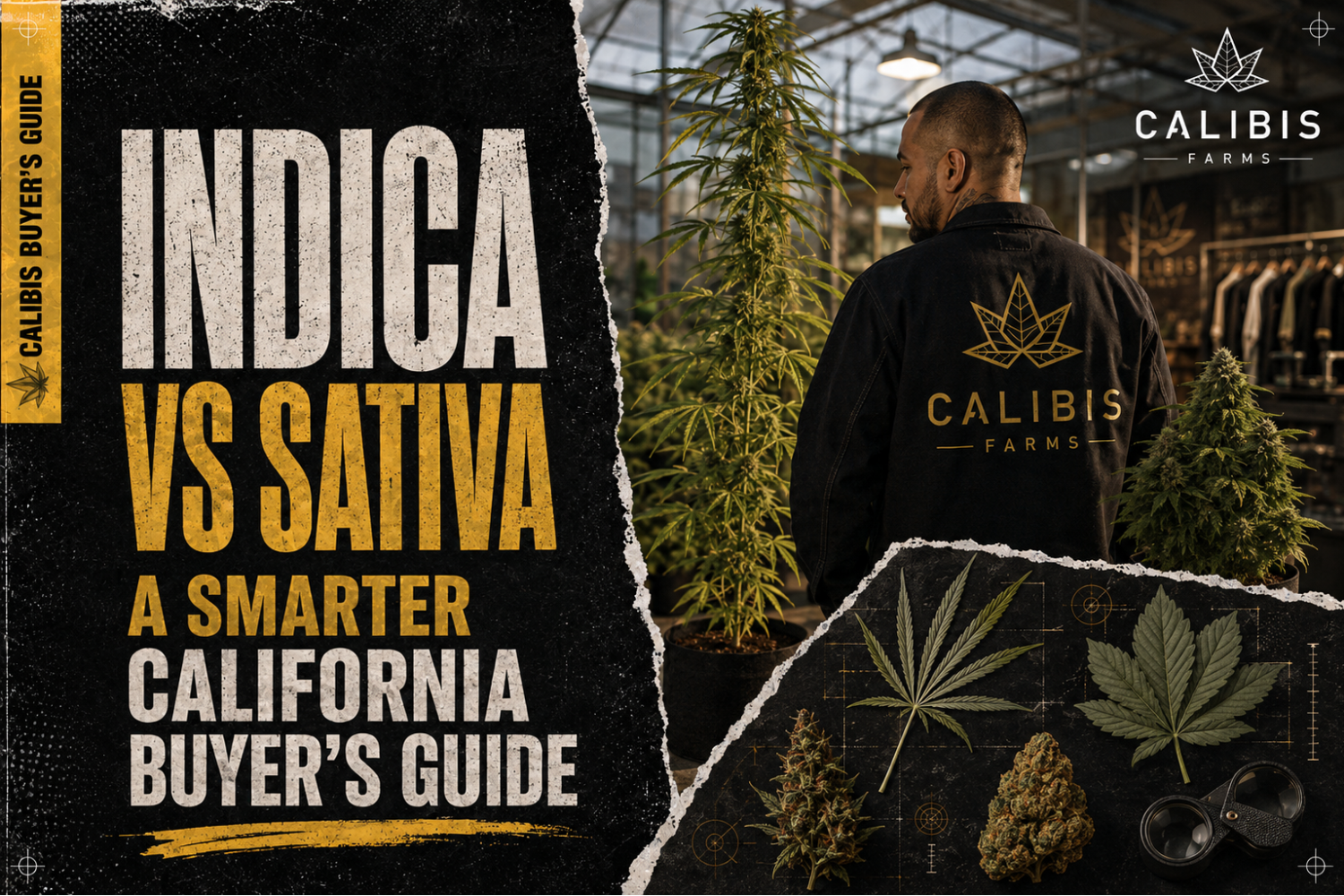
Indica vs sativa is one of the first comparisons California cannabis shoppers encounter, but those two words do not tell the whole story. They can offer a familiar starting point, yet the product’s cannabinoid content, terpene profile, formulation, serving size, and your individual response may be more useful when choosing a cannabis vape.
This guide explains what indica, sativa, and hybrid labels traditionally mean, where those categories fall short, and what adults in Roseville and throughout California should check before buying. It is educational content for adults 21 and older, not medical advice, and no cannabis product is risk-free.
Indica vs Sativa: The Short Answer
In traditional cannabis culture, indica products are commonly described as relaxing or body-focused, while sativa products are often described as uplifting or cerebral. A hybrid strain is marketed as combining characteristics associated with both categories.
Those descriptions are widely recognized, but they are not a guarantee of chemistry or effects. A large analysis of nearly 90,000 commercial cannabis samples found that indica, sativa, and hybrid labels did not reliably distinguish products by their chemical composition. Two products carrying the same category may have different cannabinoid concentrations and terpene profiles.
The practical takeaway is simple: use indica vs sativa as an orientation tool, not as the only reason to select a product.
Indica vs Sativa Effects: What Shoppers Traditionally Expect
Indica
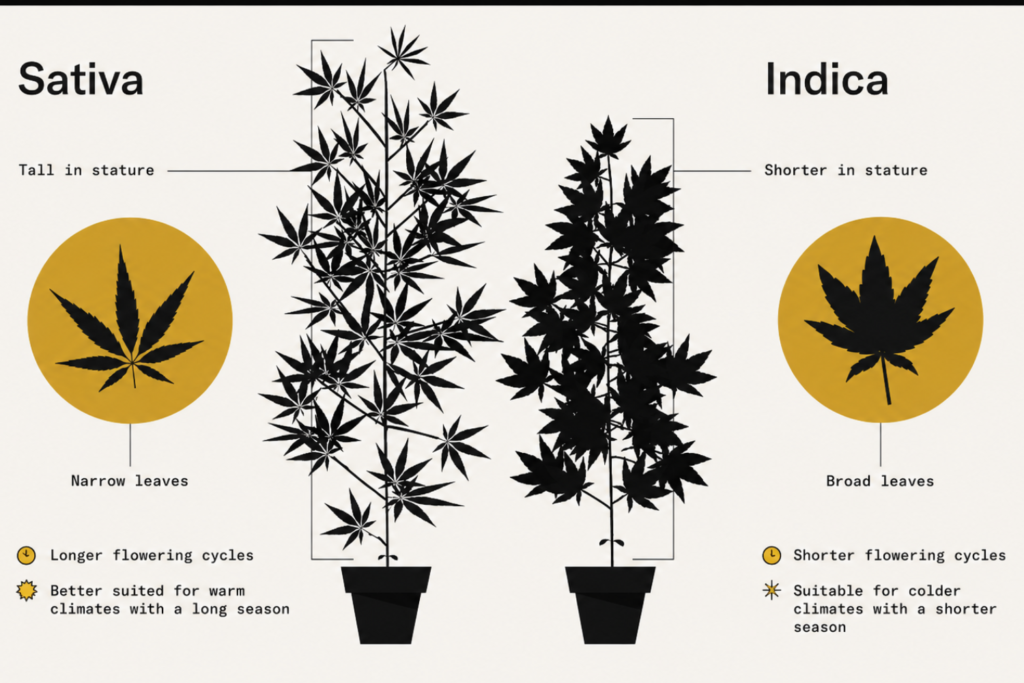
Indica has traditionally referred to shorter, broader-leaf cannabis plants associated in consumer culture with evening use and a calmer experience. Retail menus may use the label to communicate a product’s expected direction, but the word alone does not reveal its THC level, CBD level, dominant terpenes, or intensity.
Sativa
Sativa has traditionally described taller, narrower-leaf plants and products marketed for an active or uplifting experience. Just like indica, a sativa label is not a standardized prediction of how every consumer will feel. Potency, formulation, serving size, tolerance, and setting can all influence the experience.
Hybrid
A hybrid strain is generally presented as combining indica- and sativa-associated genetics or characteristics. Some menus further divide hybrids into indica-dominant, sativa-dominant, or balanced options. These terms can help shoppers organize a large menu, but they still do not replace the product label and chemical profile.
Why Indica vs Sativa Does Not Predict Every Experience
Cannabis is chemically complex. Research published in PLOS ONE found poor alignment between popular indica, sativa, and hybrid labels and the chemical diversity measured across commercial products. Another genomic and chemical study concluded that the commonly used sativa–indica scale poorly captures overall variation.
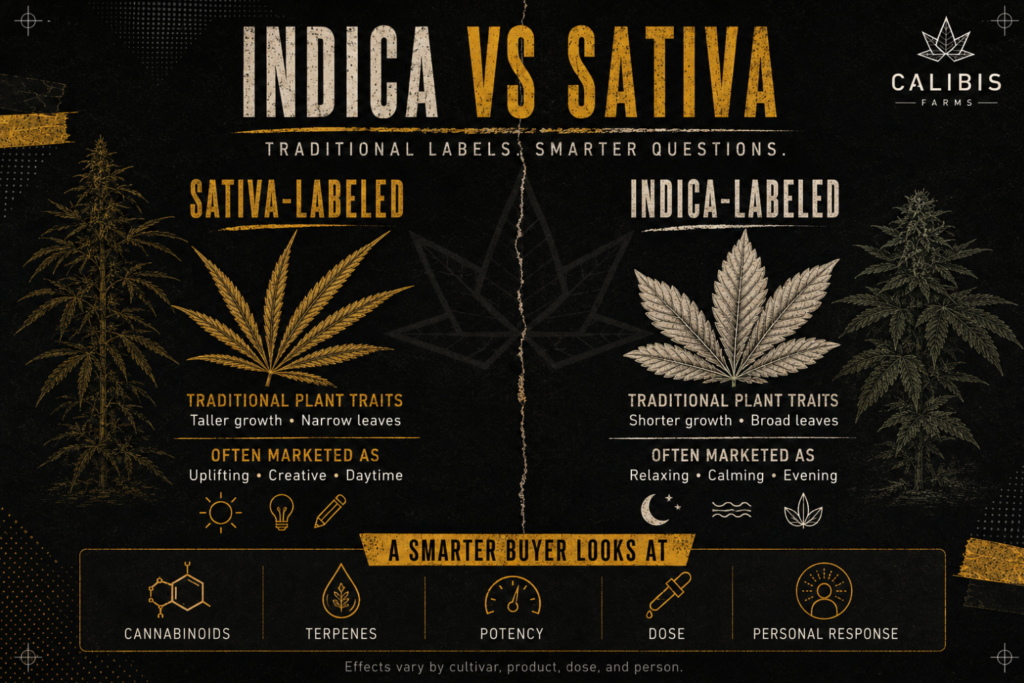
This does not mean the categories are useless. They can summarize a producer’s intended positioning or a familiar style. The problem begins when a broad category is treated like a precise promise.
Several factors can change how a product is experienced:
- Cannabinoid concentration: THC, CBD, and minor cannabinoids vary between products and batches.
- Terpene profile: Terpenes contribute aroma and flavor, and different products can contain very different combinations.
- Formulation: Flower, cured resin, distillate, and other vape formulations do not present the plant in exactly the same way.
- Serving size: A larger inhalation or repeated use can create a very different experience from a smaller amount.
- Personal factors: Experience, tolerance, metabolism, mood, and surroundings can affect individual response.
For these reasons, two people may describe the same product differently, and one person may respond differently on separate occasions.
Indica vs Sativa: What California Buyers Should Read on the Label
California requires regulated cannabis products to carry specific information. When comparing indica vs sativa products, look beyond the category printed on the front and review the complete package.
Cannabinoid content
Review the labeled THC and CBD amounts or percentages. Higher THC does not automatically mean better quality, better flavor, or a better match for your preferences. Consumers with limited experience should take a cautious approach and avoid treating potency as a competition.
Ingredient list
Manufactured cannabis products must list ingredients in descending order by weight or volume. For a vape cartridge, this section helps you understand what is in the formulation instead of relying only on the strain name or package design.
Batch and package information
California labeling requirements include a UID tracking number, batch or lot number, package date, manufacturer information, and required warnings. These details connect the item to the regulated supply chain and help distinguish a compliant product from an anonymous cartridge.
Terpene and flavor information
If available, review the named terpenes or flavor description. Consumers comparing indica vs sativa often discover that aroma and flavor preferences are easier to communicate than a desired effect. Citrus, pine, floral, earthy, spicy, and fruit-forward profiles can provide a more concrete starting point.
To explore this topic further, read the Calibis guide to botanical vs cannabis-derived terpenes.
How to Compare Cannabis Vape Options More Carefully
A thoughtful purchase decision combines the familiar indica vs sativa framework with product-specific information. Use this process at a licensed California retailer:
- Begin with the experience you want to avoid or explore. Explain your preferences without expecting the category to guarantee a result.
- Compare cannabinoid content. Note THC, CBD, and any other cannabinoids disclosed on the package.
- Review the formulation. Understand whether the cartridge contains distillate, cured resin, or another type of cannabis oil.
- Consider aroma and flavor. Use terpene or flavor information to narrow the menu.
- Check the complete label. Confirm the ingredients, batch details, package date, manufacturer, universal cannabis symbol, and warnings.
- Purchase only through a licensed retailer. Verify the business through California’s official license-search resources.
- Start low and go slow. Give yourself time to understand your response before considering additional use.
For a broader product checklist, see the Calibis cannabis vape guide for California buyers.
Shopping for Cannabis Near Roseville, California
Adults shopping in the Roseville area should use licensed California retailers and verify current product availability before traveling. A social-media account, delivery advertisement, or professional-looking menu does not prove that a seller holds an active state license.
The California Department of Cannabis Control operates the Real California Cannabis resource, which helps consumers locate licensed retailers. Licensed products must move through the regulated supply chain and meet state packaging, labeling, and testing requirements before retail sale.
Availability can change by retailer and location. Use the Calibis Farms locations page to explore nearby options, then confirm the retailer’s license and current menu directly.
Common Indica vs Sativa Shopping Mistakes
Assuming every indica will feel the same
Products within the same category can have different cannabinoid and terpene profiles. Compare the actual package rather than relying on the label alone.
Choosing only by the highest THC number
Potency is one characteristic, not a complete quality score. Hardware, oil formulation, aroma, ingredients, serving size, and personal preference also matter.
Treating a hybrid as automatically mild
Hybrid describes a broad category and does not guarantee moderate potency or balanced effects. Read the cannabinoid information for the specific product.
Expecting a guaranteed medical outcome
Indica vs sativa labels should not be treated as medical instructions or promises to diagnose, treat, cure, or prevent a condition. Consumers using cannabis for medical purposes should consult a qualified healthcare professional.
Buying from an unlicensed seller
Unlicensed products may not meet California’s testing, labeling, packaging, or tracking requirements. Always verify the retailer before purchasing.
Frequently Asked Questions
Is indica stronger than sativa?
Not necessarily. Strength depends on the specific product’s cannabinoid concentration, formulation, serving size, and the consumer’s response. Either category can include lower- or higher-potency products.
Does sativa always provide energy?
No. Sativa is commonly marketed in that direction, but the label does not guarantee a particular effect. Chemistry and individual response vary.
What does hybrid strain mean?
A hybrid strain is generally marketed as combining indica- and sativa-associated genetics or characteristics. Some products are described as balanced, indica-dominant, or sativa-dominant, but shoppers should still read the cannabinoid, ingredient, and terpene information.
Are indica and sativa labels scientifically accurate?
Research indicates that commercial indica, sativa, and hybrid labels do not reliably map to distinct overall chemical profiles. They remain familiar shopping categories, but they should be considered alongside more specific product information.
Does indica vs sativa really matter?
It matters as a familiar way to organize products and begin a conversation, but it should not be treated as a guaranteed prediction. Cannabinoid content, terpene profile, formulation, serving size, and personal response provide important additional context.
What should a first-time California vape buyer prioritize?
Start with a licensed retailer and a sealed, compliant product. Review cannabinoid content, ingredients, formulation, batch information, package date, warnings, and hardware instructions. Begin cautiously and never drive after consuming cannabis.
Where can I find Calibis products near Roseville?
Check the Calibis Farms locations page for current retail partners and contact the retailer to confirm inventory. Product selection can change, so verify availability before visiting.
Indica vs Sativa: A Better Way to Choose
Indica vs sativa remains a useful language for starting a conversation, but it should not end the decision. A better California buying process considers the complete product: cannabinoids, terpenes, formulation, ingredients, batch information, responsible serving, and a verified licensed source.
For Roseville-area adults, the goal is not to find a label that promises a universal experience. It is to choose a regulated product with clear information that fits your preferences. Explore Calibis Farms products through licensed California retail partners and use responsibly.